Domestic Goddess Tip : Cookware

Domestic Goddess Tip : Cookware

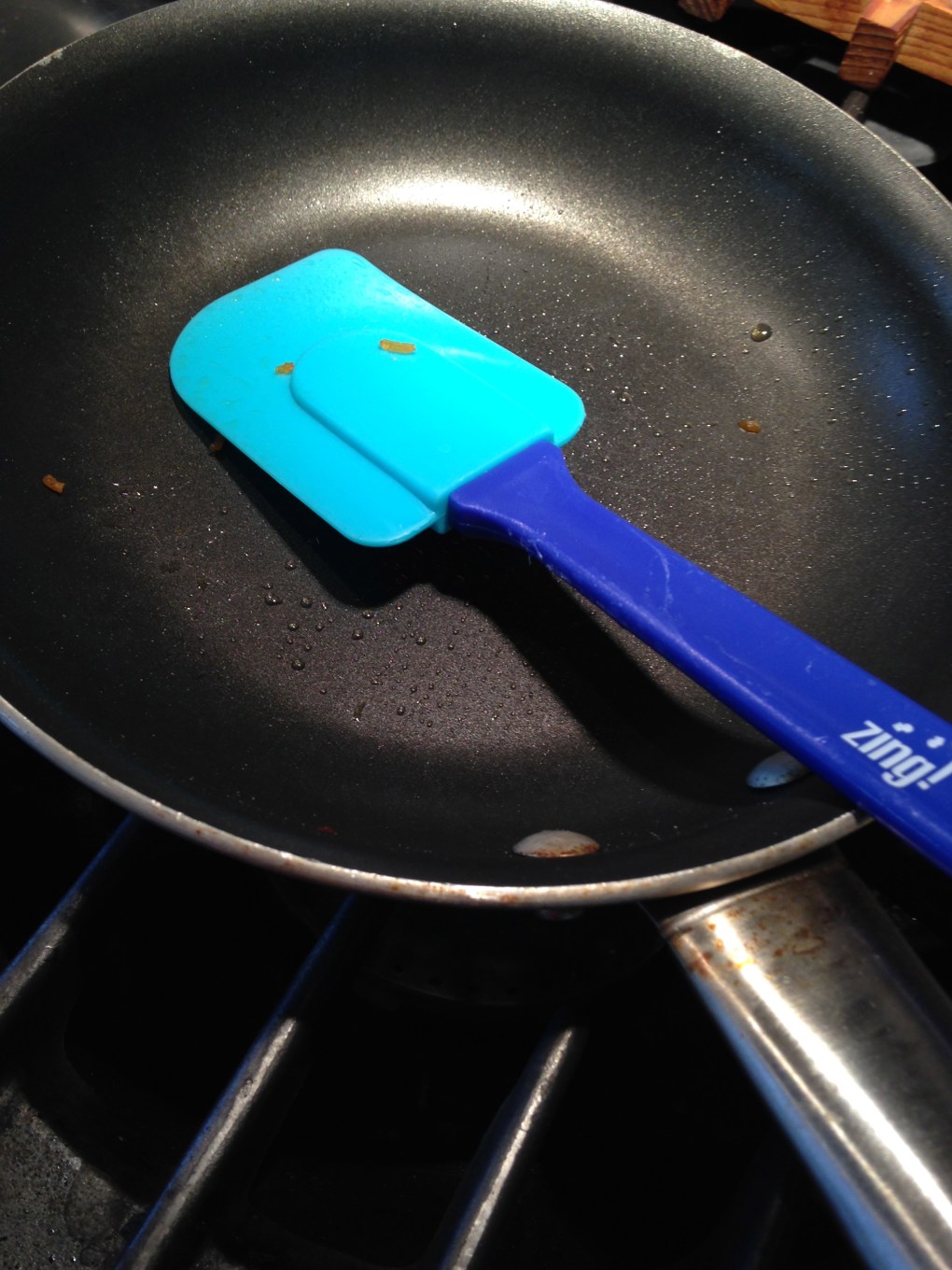
Making my morning eggs (today I fried leftover arroz con gandules with an egg) reminded me to share a cookware tip I learned from one of my favorite cooking magazines.

When it comes to non-stick cookware, don’t invest a lot of money. The non-stick does not remain non-stick forever. In fact with regular use, it will only last about a year. Armed with that knowledge buy a pan that is heavier metal and hopefully cladded (metals pressed together into a disc that provides even heating). In current pricing, that price range should be under $40. Target and HomeGoods are favorite shops I find good quality, low priced non-stick in. HomeGoods typically has nice pans for $20 or under.

I use my 6 & 8 inch non-sticks daily, definitely on a regular basis, but I only use them for foods that are liable to stick, like eggs do. Many will use them for low-fat cooking, but I find them to not brown food as well as a traditional pan. So in my kitchen, they are limited to the sticky food cooking. For a pan sautéed chicken breast, I will use my traditional pan, because I want the flavor packed fond that is created by the Maillard Reaction. (click photo to have Maillard Reaction explained)

So my tip of the day is to check your pans. If they are older than a year, it’s time to pitch it and pick up a new one.

Note: If you have purchased a non-stick brand like All-Clad, they have a lifetime warranty. Contact the customer service to see if you qualify. Personally, I find that whole process a hassle, that is why I stick to inexpensive and disposable.

Domestic Goddess Tip : Turkey Brining

Domestic Goddess Tip : Turkey Brining

I suggested in a previous post (click on the photo to take you to ‘Got Turkey? Brine it!‘), I brine my turkey in a construction cooler.
Some of the benefits of doing it this way are:
*Its insulated, so it frees up your refrigerator
*You only dirty one container (and a measuring container)
*it fits up to a 20 lb bird (although you may have to cram it in)
*draining is a snap!!!
When your brining time is up, simply heft it up to the sink, push in the spout and drain out liquid. Then its a breeze to pull out your turkey, rinse it off and prep it for the oven.

(For brining recipe please visit the link : Got Turkey? Brine it!


Domestic Goddess Cooking Tip – Turkey Stock-Recipe Included (2019 Updates!)

IMG_3747

Are you making Thanksgiving for a crowd, want a turkey stock that makes enough for your stuffing (see Netties Stuffing) and a boat load of gravy?

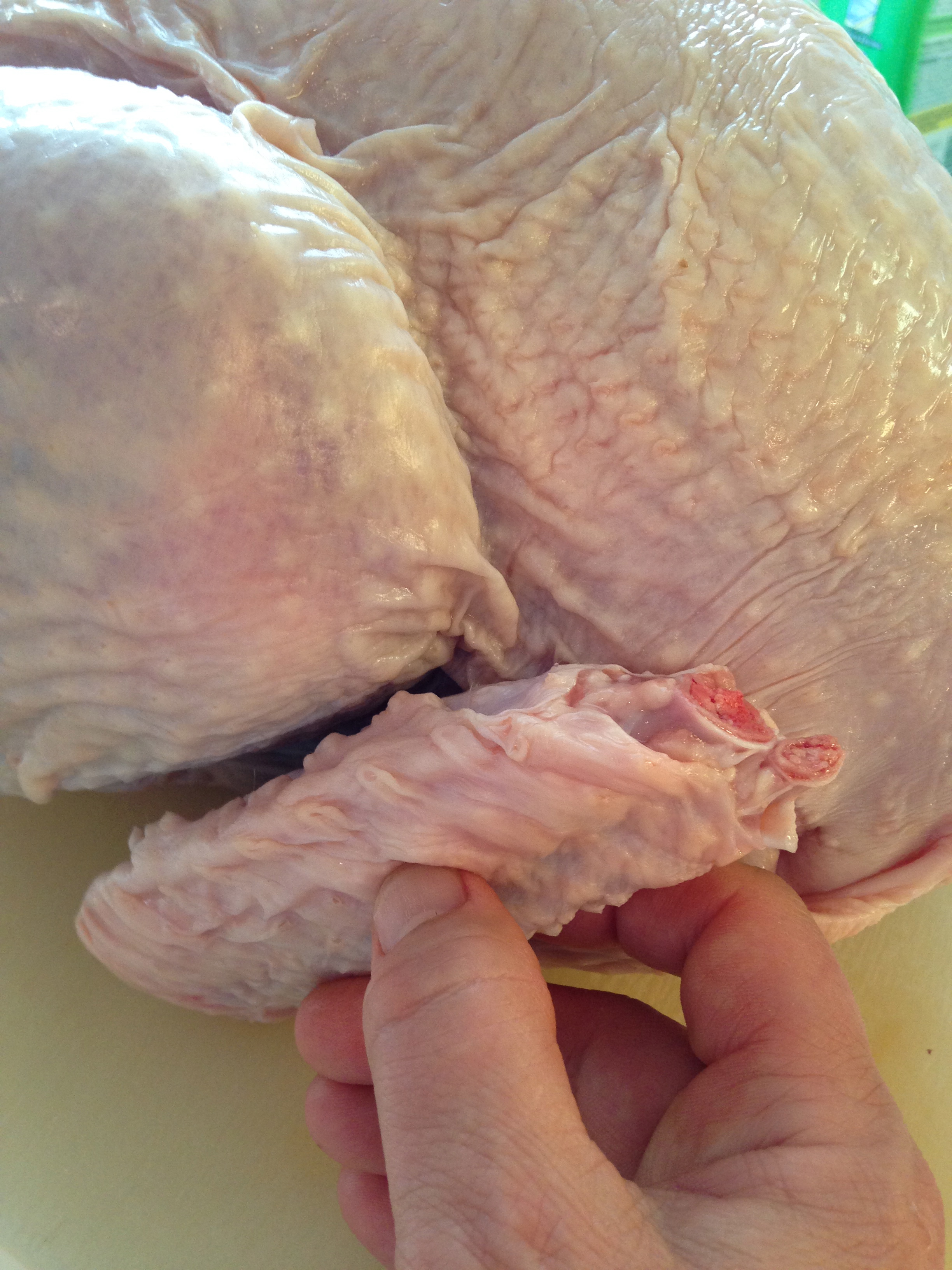
Domestic Goddess Tip of the Day: Clip the tips off the wings, leaving the drummie and meaty finger.

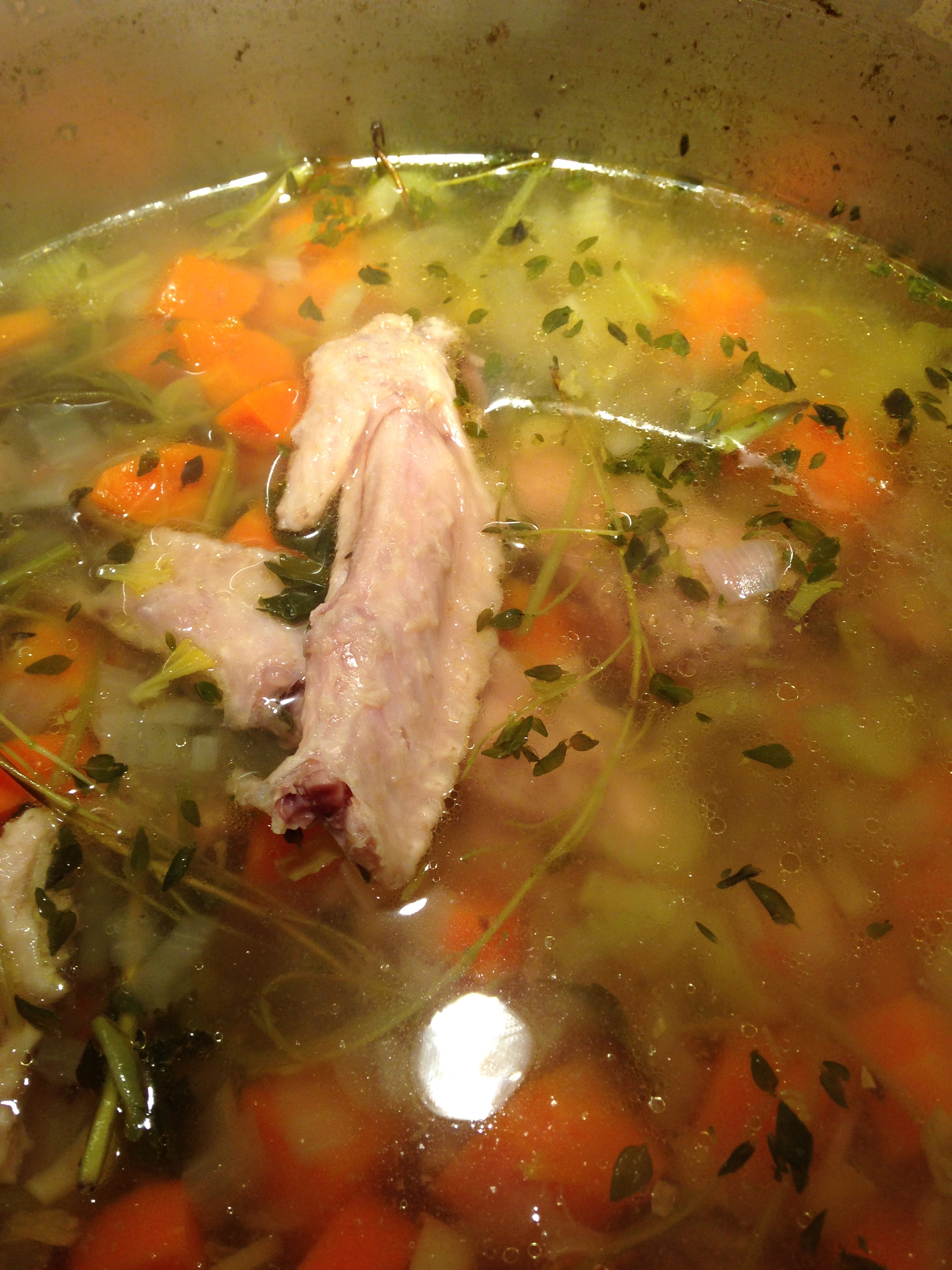
You can also add saved up chicken necks or chicken wings to your stock to ‘Oomph’ up the flavor. I always cook the Neck, Gizzards and Heart in the stock, (But do NOT add the Liver. Cook your liver separate in a small skillet with a little butter, then dice it up and add back to the gravy, along with the neck meat, diced heart and gizzard. Cooking the liver in the stock can impart a bitter taste. Trust me, it’s quite delicious and a great way to get the fam to eat organ meats)
The flavor that resides in the poultry fat is water soluble. So, by adding the fatty wings, you pull out the flavor and can then skim & throw away the fat.

(2019 Update) Over the past couple of years, I have increasingly seen my meat departments carry packages of necks, wings and gizzards BEFORE the holiday! It’s so totally awesome! Now, I head out to the grocery a week in advance (you can freeze the stock, so you could make it a month in advance if you can find the meats)
For this batch I now use 3 quarts water, add 2 necks, 2-4 wings, back bone (if included), and the gizzards (not liver). Using the added meats really increases the collagen and richness of the stock, I highly recommend to ‘go big’ and make a full stock pot of stock, then you have stock for your dressing, gravy and soup the next day.
Then again, you may want just enough for the big meal itself. Its a flexible recipe, add a bit more or less of the herbs depending on your tastes. I now add a couple palm fulls of herbs de provence and strain the stock after cooking, squeezing as much goodness out of those bones.

Here is my ‘go-to’ flexible recipe for Turkey Stock:
3 quarts of water
3-4 large Carrots, rough chopped
3-4 Stalks of Celery, rough chopped
1 Large (or 2 medium) Onions, rough chopped
1/2 a bunch of Parsley (the stocks of parsley are a great way to pinch a penny and use something people usually throw-away)
2-3 sprigs of Fresh Sage (or 1 tbsp dried)
2-3 sprigs of Fresh Thyme (or 1 tbsp dried)
Turkey Neck, heart, giblets and wing tips or whole wings, don’t forget the tail is good to clip and use in your stock also.
whole peppercorns

Let it simmer, lid off for at least an hour, maybe 2. I usually end up with about 8 cups of stock. If you do this the day before (like I do) while your turkey is brining overnight, strain and store overnight in the fridge.

(2019 Update) I make this now about 5 days in advance. When cold, the fat will rise to the top and is easy to peel off. This stock makes a gravy your family and friends will rave about…so make sure you make a big batch!

Rarely does anyone eat the the wing, while the cartilage and fat add a lot of flavor. So try this little trick of mine!

IMG_3751